A Gift This Season, Not a Setback
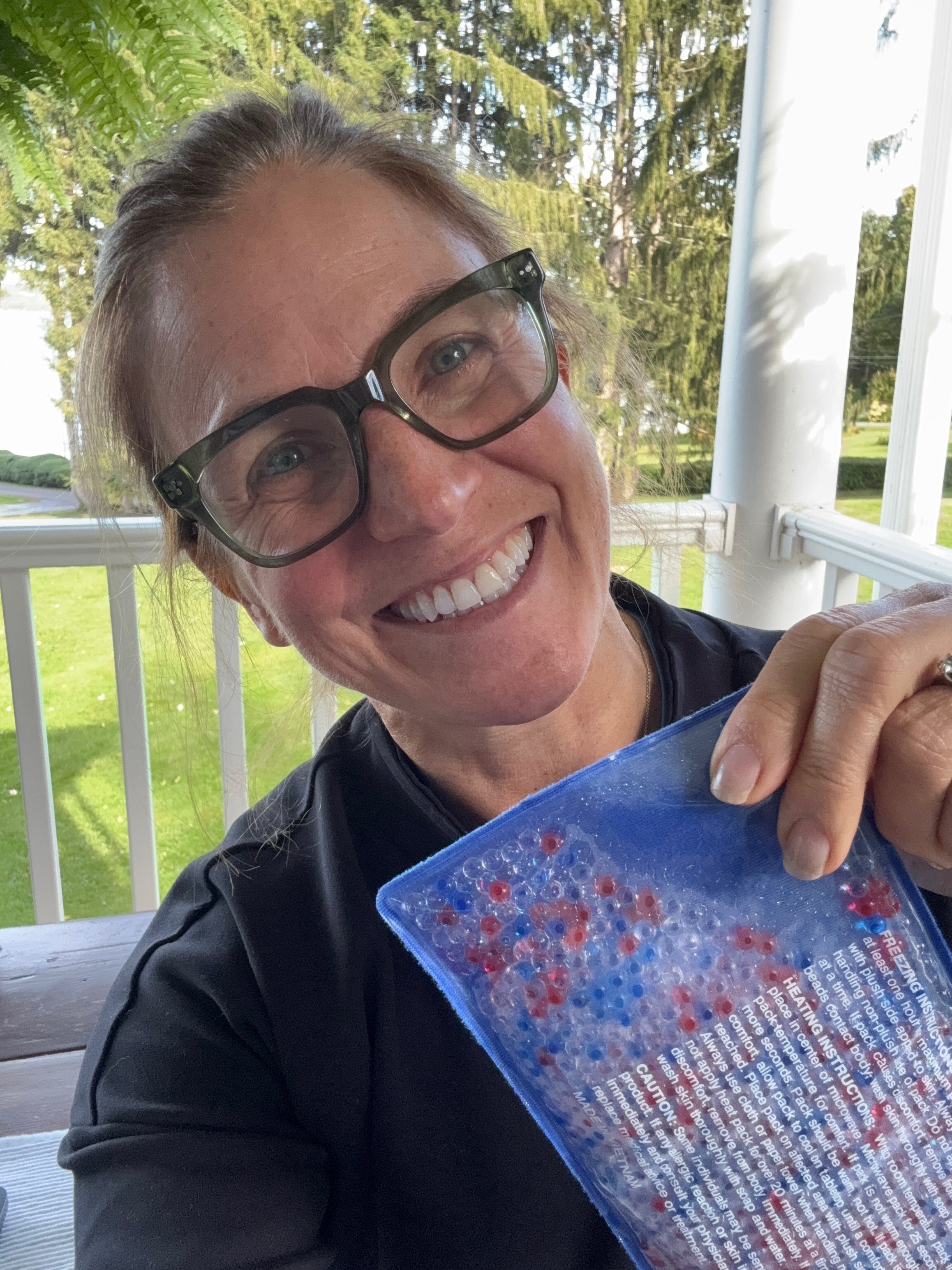
That's gonna hurt later on
So I had a fall this week.
My pup jumped up on me, and my feet slipped out from underneath me. I landed on my side—probably trying to protect my hip—with all 50 lbs of pup landing right on top of me. I got up and said, “That's gonna hurt later on.”
It did. After an urgent care visit and a CT scan: two fractured ribs.
Then the woman asked me, “Do you need a note for disability for your work?”
Huh. That's not really a thing when you own and run your own small business. My morning job is personal training clients online, always moving and showing examples. My afternoon job is nutrition counseling.
So how the heck am I going to do this?
The answer, it turns out, is something I've been learning for years:
work with what I can do,
trust the foundation I've built,
and give recovery the attention it deserves.
A familiar fall pattern
Over the past decade, I've noticed a familiar fall pattern. Pushing too hard. Trying to change too much. Not giving myself adequate rest between things.
This injury wasn't caused by a busy calendar. But it landed right in the middle of a season when I usually keep going, no matter how tired I feel.
And this time, I can't simply push through.
But— I am moving through this one so differently this year. To understand why, let's back up.
I was never an athlete. Like ever.
I tried high school sports: cut, time and time again, and told I should try the arts. Tried ROTC: failed the PT test. I wanted to be part of a team so badly that I became manager of the basketball and volleyball teams, just to be involved.
So when I got to college and saw the crew guys carrying a boat around the quad with sandwich board signs that read, “Have you always wanted to be an athlete? Join crew now and we will teach you,” I signed up immediately.
I sucked as a rower. I didn’t have the range of motion to get the oar over the gunnel and into the water. I could not even do dry land training- a burpee or a run, without dragging my shorter-by-two-inches leg around. But I wanted to be part of the team so bad, so I became a coxswain. Though I was constantly being told I could not do things, I found ways to be included. And that was good enough at the time, given multiple surgeries as a young child, with multiple moves as a military brat and never in one place long enough for a consistent recovery plan. It was also the ’70s and ’80s. PT just wasn't a thing like it is now.
I wanted so much to be capable. To participate. To keep up.
So, Can you change the story you've been telling yourself about what your body can do?
I believe you can.
Fast forward to short coaching career, fast track wedding and raising three kids, and a dozen years went by. It was not until my three kids reached their more independent stages—4th, 6th and 7th grade—and were heavily involved in hockey, soccer, baseball and golf, I went back to school to learn the science of exercise. At the time, it was mostly to help my kids do the right thing.
With a lot of perseverance, I clawed my way through Personal Training School: studying, training, working out, testing; and, while schlepping off to hockey rinks, pool decks, and turf fields, I learned what sets, reps, SMART goals and age-appropriate exercise meant to the human body.
I LOVED learning. Even more, I loved coaching.
What I wasn't so good at was demonstrating every movement. So I learned early on to use my voice and my words to help clients understand, move well and get results.
Without realizing it, I was already practicing lesson one: do what you can with the strengths you have.
Using my voice
Starting my own online nutrition and fitness business in 2020 was humbling and exhilarating. I got to use my voice, challenge my clients and build a community. JRAPPFIT has grown into a steady stream of new clients, new offerings and new ways to build strength from your own home and make good meals from your own kitchen, all in 30 minutes.
As the business grew, my coaching skills grew too.
I began noticing where clients were getting stuck. Often, they needed more attention to joint mobility before they could progress with strength. That led me to develop and trademark KINSTRENGTH: a combination of mobility, balance, dynamic warm-up and effective resistance exercises. I not only loved this new programming for my clients, but reaped the benefits of teaching and executing new mobility exercises for myself. My squats got better. My walking got better. My balance improved. My core strength improved. My ability for EVERYDAY livelihood improved tenfold- walking, hiking, jiggle running, everything got better.
Along the way, I slipped back into the habit of doing the workouts while coaching them. Moving with my clients. Demonstrating. Getting my own training in too.
So when this injury happened and I was told a minimum of four to six weeks of recovery with no lifting, I knew it was time to PIVOT.
I GET TO DO THIS!
I get to return to a different form of coaching, teaching and watching more than showing.
To pay closer attention.
To find new words and cues that help clients connect with their own movement.
This time, the discipline is in the not doing.
With a little wisdom and age, I recognize this as a gift this season: a chance to use the skills I've built, appreciate the strength I've earned, and practice the rest I've too often skipped.
That's growth mindset in real life.
Here are three lessons that might help you in this season too.
Lesson one: Do what you can, not what you cannot
When you've been consistent with strength training, a hiccup doesn't erase your foundation. It asks you to adjust.
You can shift your mindset to: “Let me do what I can, not what I cannot.”
Right now, I can coach with my voice—the very thing I learned to rely on long before this injury. I can watch more closely, offer thoughtful cues and help my clients keep progressing.
What I cannot do is lift for several weeks.
I'm choosing to put my energy into what is available to me today. The same way that girl who couldn't make the team found a way to be part of it.
There is more than one way to keep showing up.
Lesson two: We train for the moment life knocks us down
In the half-second I was falling, I didn't think. My body turned, perhaps to protect my hip, took the weight of a 50 lb pup, and got me back on my feet.
I can't know exactly how much my training changed that fall. But I know the strength I've built helps me move through life with more capacity and confidence.
That comes from years of showing up, consistently, one workout at a time.
The girl who was cut from every team and told to try singing? She kept learning what her body could do. She built strength she now gets to carry into an unexpected, messy moment.
We train for the adventures we want to say yes to—and for the moments we never see coming.
We strength train so that when life knocks us down, we have more strength to get back up.
Lesson three: Rest is training too
And this season, getting back up means something new for me: actually resting.
As a kid, there was never a consistent plan for recovery. As an adult, I've repeated that familiar fall pattern of pushing too hard and not resting between things.
I've gotten very good at showing up for the work. Now I get to practice showing up for recovery with that same intention.
This time, rest isn't optional. And I'm going to give it more than whatever time is left at the end of the day.
Recovery isn't time off from training. It's part of it.
Doing what I can also means respecting what my body needs. Trusting my foundation means allowing it time to heal.
All three lessons come back to the same thing: knowing when to challenge myself and when to give myself room to recover.
So if you're on a Zoom with me over the next four to six weeks, you'll hear more of my voice and see a little less of my reps. You'll still get thoughtful coaching, a good challenge and my full attention.
I'll be practicing right alongside you—just a different lesson this time.
A gift this season, not a setback.
If any of this resonates with you, I’d love to welcome you into our Beginner Strength Class, starting October 21.
Six weeks. Two classes a week. Forty minutes each.
A chance to learn, move and build consistency—with a coach who watches how you move, offers guidance and helps you grow stronger at your own pace.
Together, we’ll build muscle, support your bone health and practice the strength and balance that help you feel more capable in everyday life.
You don’t need an athletic background. Just a willingness to begin.
Join our Beginner Strength Classes here: a welcoming community to build the strength that helps you age strong—and meet life’s unexpected moments with more confidence.